
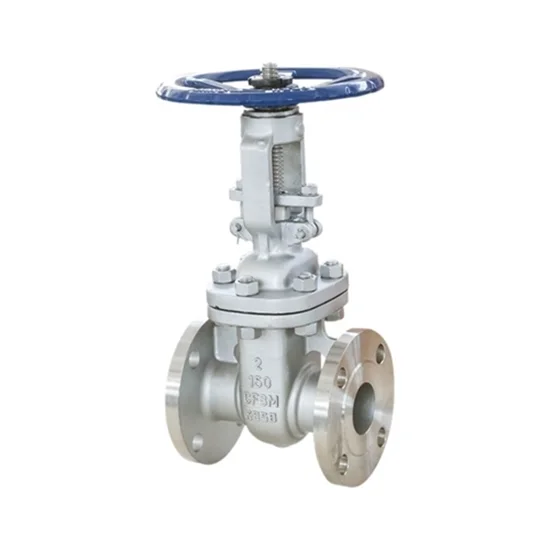
Description
Note: This gate valve cannot be used for drinking water.
1 inch (DN25) flanged gate valve is a crucial component in fluid control systems, particularly in water-related applications. Operating on the OS&Y (Outside Screw and Yoke) mechanism, it ensures reliable performance. Crafted from durable stainless steel, the 25mm ss flanged gate valve guarantees longevity and corrosion resistance, crucial for water-related environments.
Specification
- Model: ATO-Z41W-DN25
- Connection Type: Flanged Type
- Flanged Port Size: 1/2 inch (DN15)
- Working Pressure (Optional): CLASS150/300
- Working Temperature: -425℃
- Valve Body Material: Stainless Steel
- Applicable Media: Water, Chemical, Petroleum, Gas, etc.
Material for Main Parts
| Valve, Cover, Flap | Valve Stem | Sealing Surface | Gasket (Ring) | Packing | Operating Temperature | Applicable Media |
| WCB | 2Cr13 | 13Cr STL Bulk Material PTFE, Nylon |
Enhanced Flexible Graphite 13Cr/Flexible Graphite SFB-2,08 Mild Steel F304, F316 |
Flexible Graphite Enhanced Flexible Graphite SFB1260 SFP1260 PTFE |
≤420℃ | Water, Steam and Oil Products |
| WC1 | 38CrMoA1 25Cr12MoV |
≤450℃ | ||||
| WC6 | ≤540℃ | |||||
| WC9 | ≤570℃ | |||||
| C5 C12 | ≤540℃ | |||||
| CF8 | F304 | ≤600℃ | Nitric Acid, Acetic Acid, Urea | |||
| CF3 | F316 | |||||
| CF8M | F304L | |||||
| CF3M | F316L |
Size (Unit: mm)
| Working Pressure | INCH | DN | L | D | D1 | D2 | b | n-φd | H | D0 |
| CLASS150LB | 1″ | 25 | 127 | 108 | 79.5 | 51 | 12 | 4-15 | 200 | 140 |
| CLASS300LB | 1″ | 25 | 165 | 124 | 89 | 51 | 18 | 4-19 | 200 | 160 |
Tips: How should leaks or failures of flanged gate valves be addressed in emergencies?
In the event of a leak or failure in flanged gate valves during an emergency, immediate action is crucial. Firstly, isolate the affected area by closing the valve and activating any emergency shut-off systems. Evacuate personnel to a safe distance and alert emergency responders. Use appropriate personal protective equipment to mitigate exposure to hazardous materials. Employ containment measures such as barriers or absorbent materials to prevent the spread of leaked substances. If feasible, attempt to repair the valve or apply temporary fixes to minimize the release. Communicate the situation clearly to relevant authorities and coordinate with response teams for efficient and safe resolution. Regular training drills and familiarization with emergency protocols enhance preparedness for such scenarios. Always prioritize safety and consult with experts when addressing valve-related emergencies.
Reviews
There are no reviews yet.