
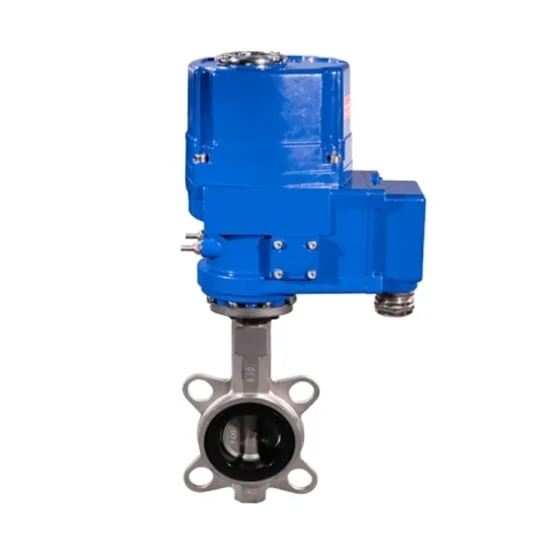
Description
Note: This butterfly valve cannot be used for drinking water.
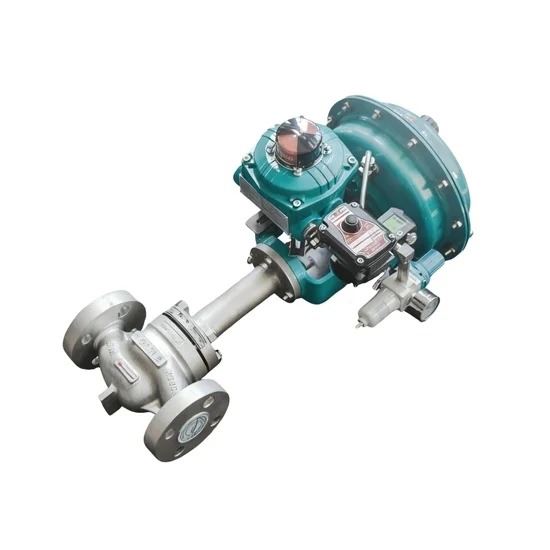
8″ explosion-proof valve is adaptable to various power requirements, with options for single-phase AC220V, 50/60 Hz, or three-phase AC380V, 50/60 Hz, designed to handle a diverse range of mediums, including water, liquids, gas, oil, powder, steam, and acid-base corrosive substances.
Feature
- New electric head: Accurate control of media flow with precise scales, smaller size and easier wiring.
- Manual and automatic integration: Electric and manual can control the valve switch. Respond to power outages by manually controlling the switch.
- Stainless steel body: high-quality leak-proof seal.
Specification
Actuator Technical Parameters
| Input & Output Signal | DC 4-20mA, DC 0-10V, DC 1-5V (Optional) |
| Optional Voltage | Single phase AC220V 50/60 Hz or three phases AC380V 50/60 Hz |
2 inch Stainless Steel Butterfly Valve, Explosion Proof Parameters
| Size | DN200 |
| Body Material | Stainless Steel (CF8, CF8M) |
| Connection Type | Wafer |
| Pressure Rating | PN1.0 |
| Structure Type | Median Line |
| Seat Material | PDEM: -10℃ ~120℃ |
| Disc Material | Stainless Steel (CF8, CF8M) |
| Stem Material | Stainless Steel (CF8, CF8M) |
| Power Supply | single Phase AC220V, 50/60 Hz or Three Phases AC380V, 50/60 Hz |
| Applicable Medium | Water, Liquids, Gas, Oil, Powder, Steam, Acid-base Corrosive Medium. |
Dimension (Unit:mm)
| DN | Inch | D | D1 | D2 | L | H | n-φd |
| 200 | 8″ | 202.5 | 270 | 295 | 60 | 353 | 4-φ23 |
Tips: Is there any maintenance required for 8″ explosion proof butterfly valve?
Regular Inspection:
- Conduct routine visual inspections to check for any signs of wear, corrosion, or damage.
- Inspect the valve body, disc, stem, and sealing components for any abnormalities.
Lubrication:
- Ensure that all moving parts, including the stem and disc pivot points, are properly lubricated according to the manufacturer’s recommendations.
- Lubricate the valve regularly to prevent friction and ensure smooth operation.
Seal Inspection:
- Check the condition of the valve seals and gaskets. Replace any damaged or worn seals to maintain a proper seal and prevent leaks.
- Verify that the sealing components are compatible with the operating conditions and media.
Corrosion Protection:
- Stainless steel valves are resistant to corrosion, but it’s essential to inspect for any signs of corrosion and address them promptly.
- Consider applying corrosion-resistant coatings or inhibitors as needed.
Functional Testing:
- Periodically perform functional tests to ensure the valve opens and closes smoothly.
- Check for any irregularities in the valve operation, such as sticking or difficulty in movement.
Temperature and Pressure Monitoring:
- Regularly monitor the temperature and pressure conditions during operation to ensure they are within the specified limits.
- If there are variations outside the recommended range, investigate and address the underlying issues.
Reviews
There are no reviews yet.