
Description
Why Ethylene Glycol 60/40
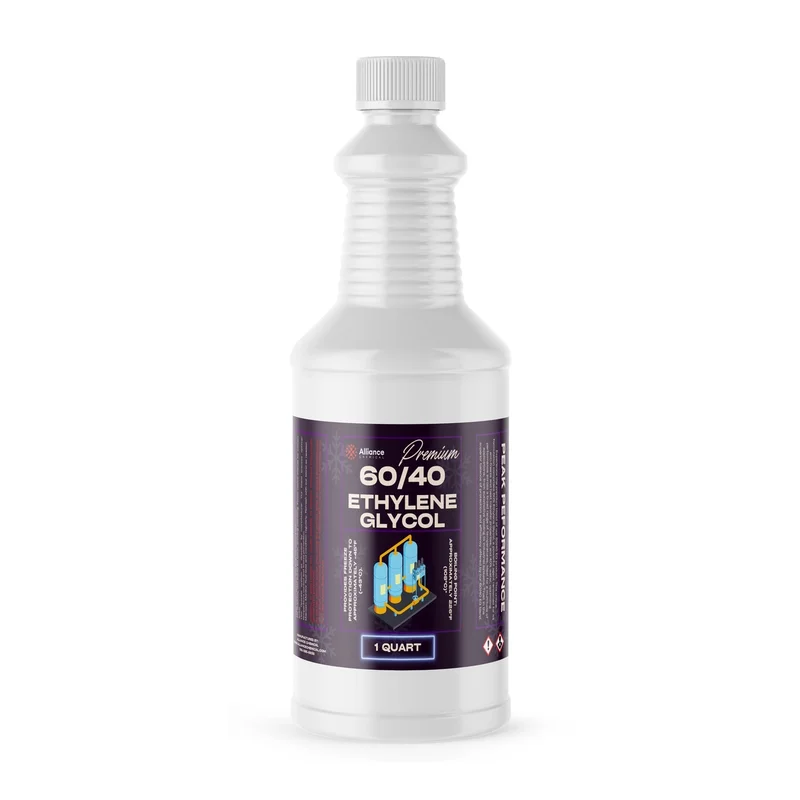
Ethylene Glycol 60/40 delivers near-maximum freeze point depression for water-based closed-loop infrastructure, defending critical systems from severe freezing in extreme industrial climates. Represented by the chemical formula C2H6O2 and CAS 107-21-1, this colorless, viscous liquid offers an exact 60 percent active concentration. This specific ratio pushes the freeze point down to approximately -60°F, representing the thermodynamic sweet spot before the freeze protection curve begins to rise again at higher concentrations. By sourcing a pre-mixed 60/40 solution, facility engineers maintain strict viscosity and heat transfer tolerances without the operational variables introduced by manual on-site dilution.Operators depend on this uninhibited blend to maintain reliable liquid state flow, preventing catastrophic pipe expansion and equipment failure during harsh winter cycles.
Best Applications for This Grade
- Commonly applied in large-scale industrial HVAC closed-loop chillers operating in northern climates, where maintaining fluid mobility at extreme sub-zero temperatures is critical to continuous plant operations.
- Commonly applied in heavy-duty diesel engines and stationary generator cooling systems. The precise 60 percent glycol fraction prevents engine block cracking during winter dormancy while supporting adequate heat dissipation during active combustion.
- Commonly applied in exterior hydronic snow melting systems installed beneath industrial loading docks or concrete driveways, where maximum burst protection dictates fluid selection over less toxic biological alternatives.
- Commonly applied in non-food process heating loops requiring a stable, thermally conductive medium that resists phase change under rapid temperature cycling and high operational demands.
When to Choose a Different Grade
- If the facility operates in a moderate climate zone where extreme sub-zero protection is unnecessary, choose Ethylene Glycol 30/70 or Ethylene Glycol 50/50. Lower concentrations provide a higher specific heat capacity, allowing the fluid to absorb and release thermal energy more efficiently.
- If the plumbing network features exposed cast iron, copper, or steel components requiring active chemical defense against oxidation and scaling, select 100% Ethylene Glycol Inhibited and dilute to the target ratio.
- If the laboratory environment requires a pure reagent supporting standardized testing procedures or highly regulated chemical synthesis, choose Ethylene Glycol ACS Grade.
- If the end product involves microchip fabrication or printed circuit board manufacturing where microscopic trace metals cause defects, select Ethylene Glycol Semiconductor Grade.
Reviews
There are no reviews yet.